
Sometimes, the hardest part of being a founder is not knowing what to build. It is knowing exactly what you want to build and realizing how far away you are from it.
You can see the company clearly in your head. The products. The people. The systems. The impact. The scale. Then you look at where you are today, and the distance between the two can feel overwhelming.
I've experienced this myself.
There are moments when I think about what I want Wikrena to become, the businesses we could help, the products we could build, the professionals we could train, and the systems we could create across Africa. Then I look at what exists today and think, "How are we going to get all the way there?"
I call this vision overwhelm.
It is that feeling you get when the size of what you want to build becomes so clear that your current resources, team, experience, time, or capacity suddenly feel inadequate.
And I don't think it necessarily means your vision is unrealistic.
Sometimes, it simply means you're looking too far ahead.
Why Vision Overwhelm Happens
Founders often see the destination long before they have built the road.
You can imagine the finished company before you have the team to build it. You can see the product ecosystem before you have the first product. You can understand the impact you want to create before you have the resources to create it.
That gap between what you see and what currently exists can be uncomfortable.
You might have ten ideas competing for your attention. You might see five different problems worth solving. You might know exactly what the company could become, but have only enough resources to work on one thing.
That is where overwhelm begins.
The mistake is thinking that because you can see the whole vision, you are supposed to execute the whole vision immediately.
You are not.
Your vision is the destination. It is not today's task list.
The Vision Can Be Bigger Than the Company
One of the things I've had to learn as a founder is that the company you have today does not need to look like the company you eventually want to build.
This sounds obvious, but it is easy to forget.
You may envision a large organisation with multiple products, a strong team, significant revenue, international reach, and substantial impact.
But today, you might still be validating an idea, building your first product, trying to get your first few customers, or figuring out which problem deserves your attention.
There is nothing wrong with that.
In fact, that is how companies are built.
The mistake is comparing your current capacity with your ultimate vision and then concluding that the gap is evidence that you cannot get there.
It isn't.
The gap simply tells you how much building remains.
Look at How Big Companies Started
Many companies we admire today began with a much narrower problem than the scale they eventually reached.
Amazon did not begin as the everything store. It started by selling books online.
Facebook did not begin by connecting the entire world. It started within a much smaller community and expanded gradually.
Tesla's early products were nowhere near the full ambition of transforming transportation.
Andela began by focusing on developing and connecting African software talent to global opportunities before growing into a much larger talent platform.
The lesson isn't that every startup should copy these companies.
The lesson is that large visions are usually executed through small, focused beginnings.
You don't need to solve the entire market on day one.
You need to solve one important problem well enough that you earn the right to solve the next one.
Start With One Friction
This is probably the most useful principle I've learned.
When your vision feels too large, find the one friction you can address right now.
What is the specific problem you're trying to solve?
Who experiences it?
How painful is it?
What does the current solution look like?
Why isn't it working well enough?
What can you build that makes it meaningfully better?
The larger vision can remain in the background.
Your immediate responsibility is to find the wedge.
A company can eventually become an ecosystem, but it usually earns that position by solving something specific first.
This is particularly important when you have many ideas.
Having many ideas isn't necessarily an advantage if they constantly compete for your attention.
Sometimes focus means deliberately leaving good ideas untouched so you can give your best attention to the one that matters most right now.
Think in Horizons, Not Mountains
One reason founders become overwhelmed is that they look at the entire mountain at once.
Instead, think in horizons.
Ask yourself:
What needs to happen in the next 90 days?
Then:
What should be true in the next one to two years?
Then:
What could this become over five years?
The answers don't need to be perfect.
The purpose is to separate the immediate from the eventual.
Your five-year vision should inspire your 90-day priorities, not compete with them.
If your long-term vision is to build a major technology company, your immediate priority might simply be getting the first version of the product into the hands of customers.
If your vision is to build a large training organisation, your immediate priority might be delivering an exceptional experience to your first cohort.
If your vision is to transform how businesses use data, your immediate priority might be helping a small number of businesses solve real problems exceptionally well.
The mountain hasn't disappeared.
You've simply stopped staring at the entire mountain and started focusing on the next section of the path.
Let Capability Compound
There is another reason you should not be too worried about the gap between where you are and where you want to be.
Capability compounds.
Every problem you solve teaches you something.
Every customer gives you information.
Every product you build improves your understanding.
Every mistake teaches you what not to do.
Every person you hire increases the capacity of the organisation.
Every successful project builds credibility.
Every improvement to your systems makes the next stage easier.
This means your future capacity does not have to come entirely from what you have today.
You build the capacity along the way.
That is why momentum matters.
The company you are capable of building five years from now may be impossible for you to build today. But the version of you and the organisation that exists five years from now may have everything required to build it.
Your job is to become that organisation one stage at a time.
Don't Confuse More Ideas With More Progress
Vision overwhelm can become worse when you have a lot of ideas.
You see another opportunity.
Then another.
Then another.
Soon you're thinking about three products, two new markets, a new business model, an entirely different technology, a partnership opportunity, and a new content strategy.
Everything seems important.
But everything cannot be the priority.
I've had to remind myself that having the ability to imagine something does not create an obligation to build it immediately.
Some ideas need to wait.
Some should be tested later.
Some will eventually prove to be bad ideas.
And that's fine.
The discipline of a founder is not only knowing what to pursue.
It is also knowing what not to pursue yet.
Your Vision Needs Systems
A big vision cannot be carried by motivation alone.
At some point, you need systems.
You need a way to decide what gets attention.
You need priorities.
You need processes.
You need people who can own parts of the work.
You need metrics that tell you whether you're moving in the right direction.
You need a rhythm for reviewing what is working and what isn't.
This is one of the reasons I increasingly think about businesses as systems rather than collections of ideas.
A founder may have the vision, but the organisation needs systems that can turn that vision into repeatable execution.
The bigger the company becomes, the less sustainable it is for everything to depend on the founder's memory, energy, and personal involvement.
You eventually have to build an organisation that can carry the vision with you.
What I'm Learning With Wikrena
Wikrena itself reminds me of this constantly.
There is a lot I want to build.
I can see the potential for businesses to use data and AI much more effectively. I can see opportunities to develop practical technology products, build stronger professional capabilities, and create systems that help African businesses operate better.
When you see all of that at once, it can feel like you're carrying several companies in your head.
And sometimes, honestly, it is overwhelming.
But I've had to remind myself that my job is not to build everything today.
My job is to figure out what needs to be built next.
Then build it properly.
Then learn from it.
Then improve.
Then build the next thing.
That sounds simple, but it requires discipline.
Because the temptation is always to jump ahead to the exciting part of the vision.
A Practical Way to Deal With Vision Overwhelm
When the vision starts feeling too heavy, I find it useful to bring the conversation back to five questions:
1. What are we ultimately trying to build?
Keep the long-term vision visible.
2. What is the most important problem we can solve right now?
This brings the vision into the present.
3. What must be true for us to solve that problem?
Identify the capabilities, resources, people, technology, and knowledge required.
4. What is the next meaningful milestone?
Not the final destination. Just the next milestone that moves you forward.
5. What should we deliberately ignore for now?
This is just as important as deciding what to pursue.
If you can answer these questions honestly, the vision becomes easier to carry.
You are no longer trying to solve the next ten years.
You are trying to solve the next important problem.
Don't Let the Size of the Vision Paralyse You
There is a strange irony in entrepreneurship.
The same vision that gives you the courage to start can sometimes become the thing that makes you afraid to continue.
You see how much needs to be done.
You see the competitors.
You see the resources you don't have.
You see the people you need to hire.
You see the technology you need to build.
You see the markets you want to enter.
And suddenly the question becomes:
"Can I really do all of this?"
Maybe not today.
That's the point.
You are not supposed to be capable of doing everything today.
You are supposed to build the capability to do more tomorrow.
A Word to Founders
If your vision feels heavy right now, don't immediately assume that something is wrong.
Sometimes the discomfort comes from knowing that the future you can see is much bigger than your present circumstances.
Don't reduce the vision simply because the execution feels difficult.
But don't use the size of the vision as an excuse to avoid doing the small, difficult work in front of you either.
Break it down.
Find the friction.
Solve the next problem.
Build the capability.
Create the system.
Then do it again.
Your responsibility is not to finish the entire vision today.
Your responsibility is to move it forward.
And if you keep doing that long enough, something interesting happens.
The thing that once felt impossibly large starts becoming your reality.
Big visions are built in small, consistent steps.
Written by
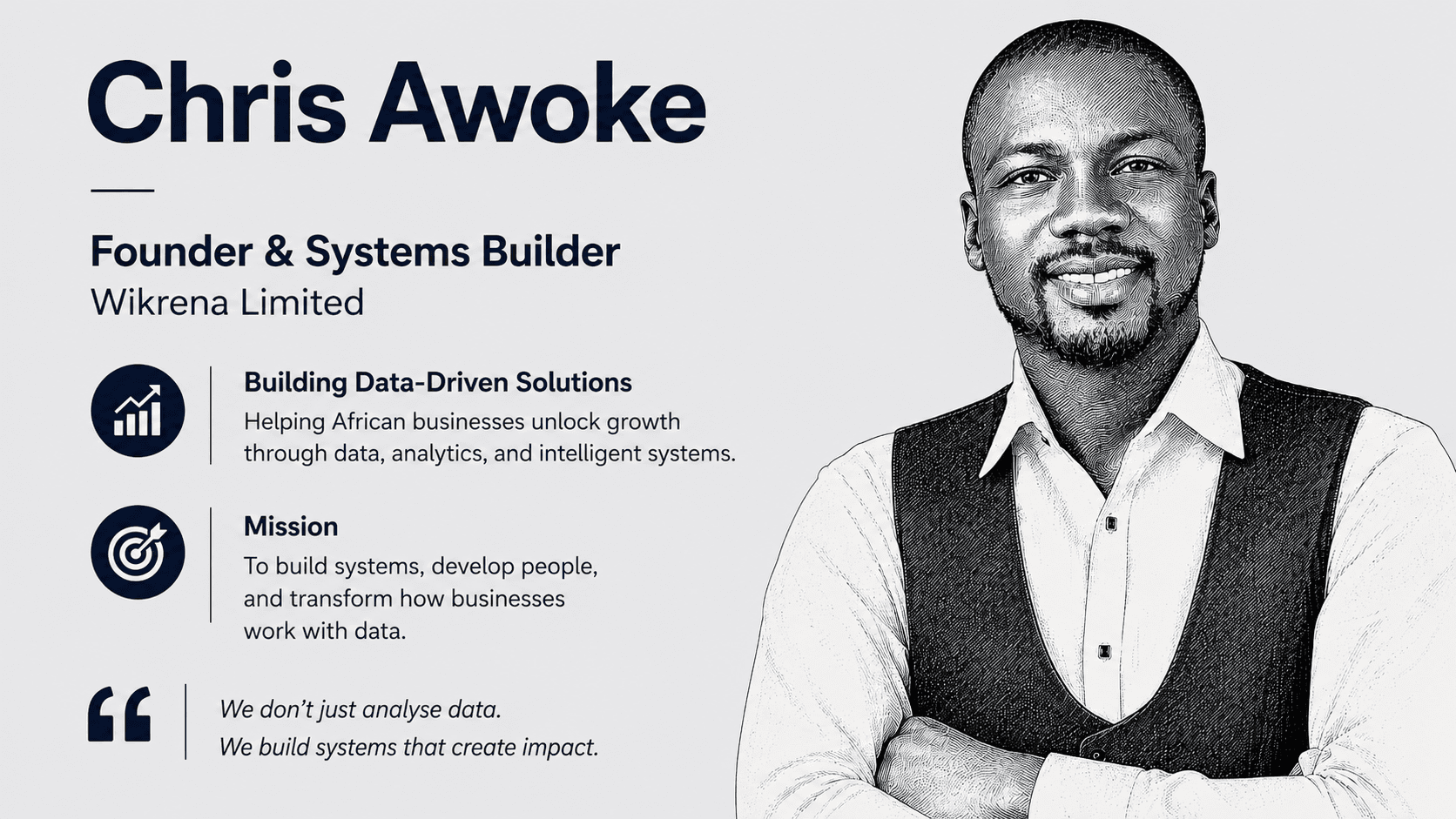
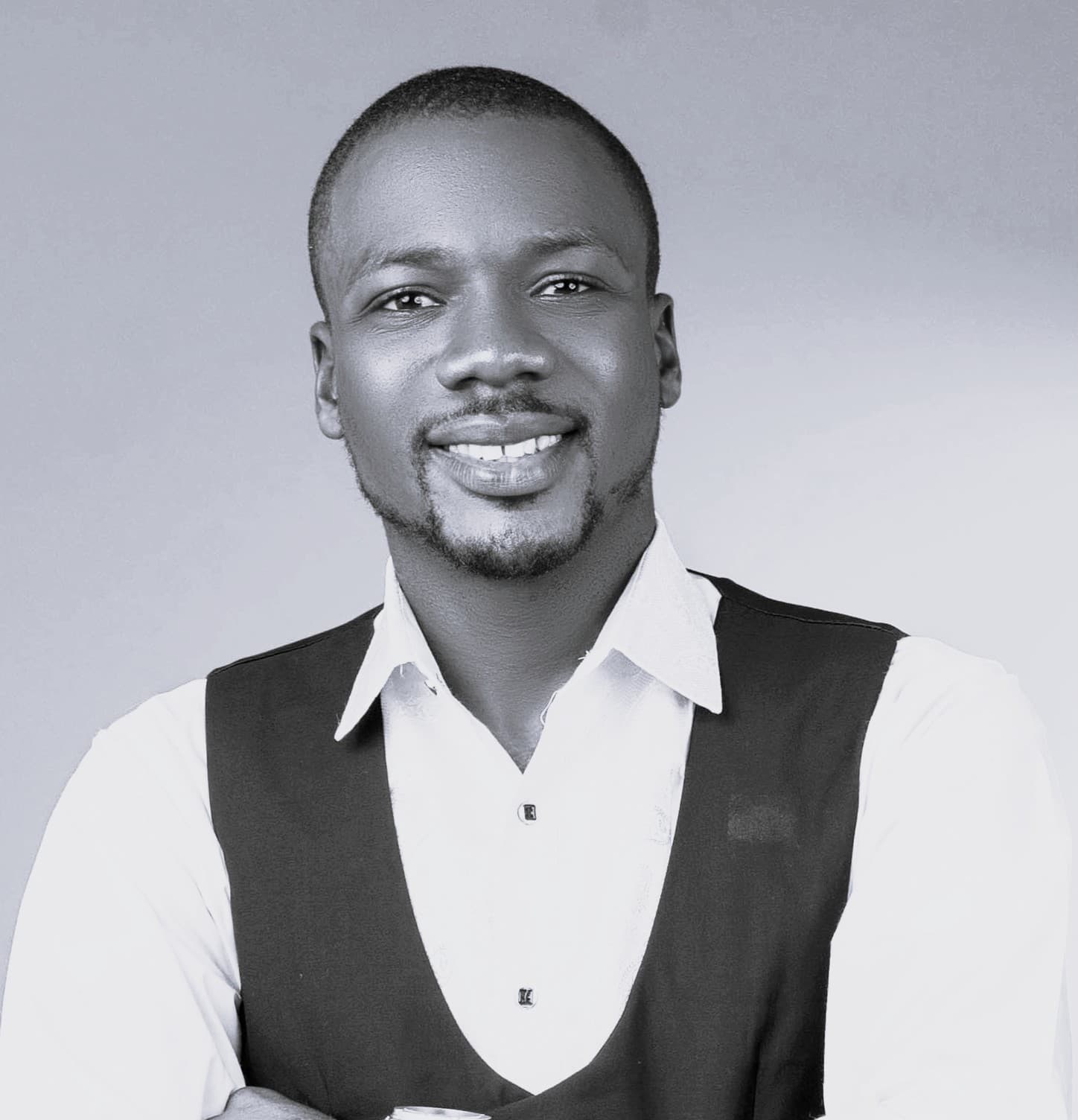
Chris Awoke
Chris Awoke is the co-founder and CEO of Wikrena Limited, a data education and AI company building the skills and systems African professionals and organisations need to make better decisions. He also runs Brenxa, a decision intelligence practice for founders, investors, and executives.